Home ›
Pests ›
Subterranean Termite
Subterranean Termite
Description
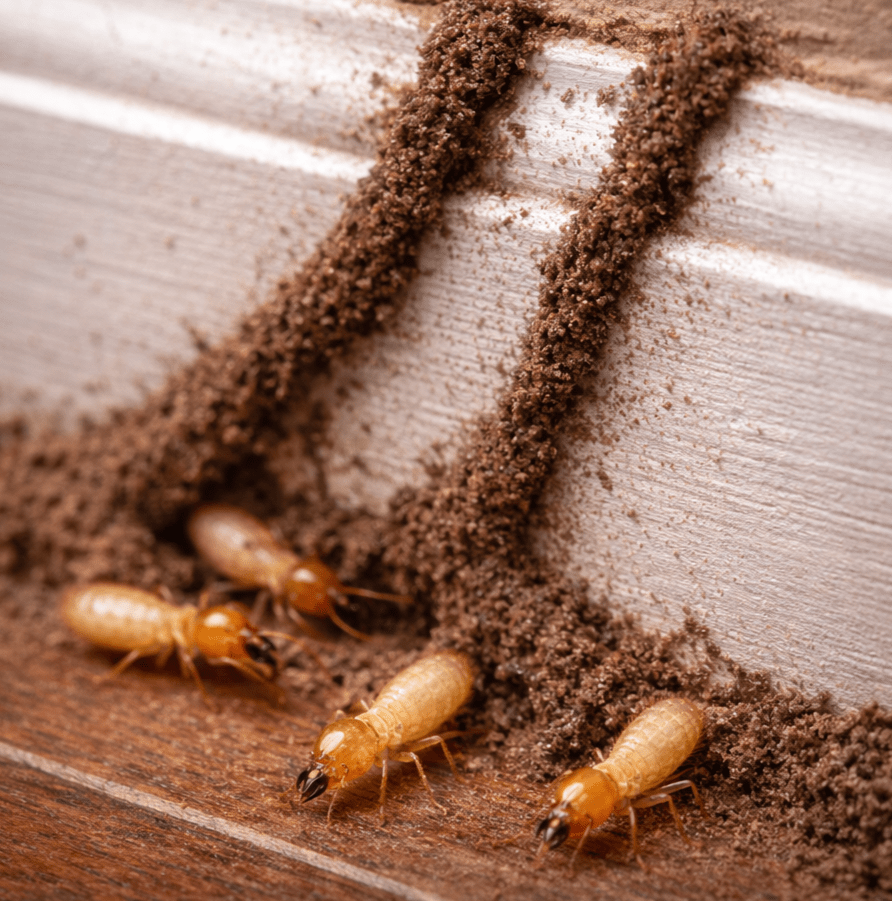
The subterranean termite lives mainly in the soil, where it forms colonies and seeks moisture. To reach wood in structures, it builds mud tubes that allow it to move while staying protected and retaining moisture.
Risks
- Structural damage: it can weaken wood in frames, doors, roofs, and interior elements.
- Damage can progress inside the wood and may not be visible at first.
- Uncontrolled infestations can lead to costly repairs.
Common signs
- Mud tubes near baseboards, columns, cracks, or walls.
- Wood that sounds hollow or feels weak when pressed.
- Doors or frames that begin to stick because of distortion.
- The presence of winged termites or discarded wings.
Why do they appear?
- Excess moisture from leaks, poor drainage, or plumbing problems.
- Wood in contact with soil or damp areas.
- Cracks or openings that make access to the structure easier.
- Vegetation touching the structure or organic material buildup.
Prevention
- Fix leaks and control moisture.
- Avoid direct wood-to-soil contact.
- Seal cracks and entry points.
- Keep the perimeter clean and properly drained.
Professional control
Subterranean termite control requires inspection and a targeted plan because the goal is to interrupt activity and protect the structure. At Bugs Or Us PR, we evaluate the situation, identify key signs, and apply safe and effective professional strategies, always prioritizing the safety of your family, pets, and the environment.
Service in: Bayamón, Corozal, Dorado, Manatí, Morovis, Naranjito, Toa Alta, Toa Baja, Vega Alta, and Vega Baja.
Related pests
Request Professional Service
← Back to Home